
Grundfos, a global leader in pump solutions and water technology, is renowned for its commitment to sustainability, innovation, and high-quality engineering. A key aspect of Grundfos’ operations is its focus on knowledge-sharing, primarily through its e-learning platform, which offers training and educational resources for various stakeholders. However, the platform’s structure was problematic, as it failed to provide users with a cohesive experience, leading to challenges in navigation and content retrieval.
As part of a digital business project, our team was tasked with redesigning Grundfos’ e-learning platform to create a more intuitive and accessible digital learning experience. The goal was to enhance user engagement, improve navigation, and ensure alignment with Grundfos’ branding and user expectations. This case study outlines our journey from research and discovery to ideation, testing, and final reflections on the project.
The primary challenge was to redesign the "Learn" section of the Grundfos website to better meet the diverse needs of its stakeholders, including installers, consulting engineers, and distributors. The existing platform lacked cohesion, with cluttered navigation and disconnected sections, making it difficult for users to find relevant information. This fragmented experience led to lower engagement and a less effective learning environment.
Our objective was to create a user-centric e-learning platform that would:
We began by conducting a thorough analysis of Grundfos’ current e-learning platform, identifying pain points such as cluttered navigation, lack of mobile accessibility, and difficulty in finding relevant content. We also analyzed the broader e-learning market, comparing Grundfos’ offerings with competitors like Xylem and Sulzer, as well as general e-learning platforms like Coursera and LinkedIn Learning.
Using the Value Proposition Canvas, we mapped out the needs, pains, and gains of three key personas: Installers, Consulting Engineers, and Distributors. This helped us understand their specific requirements and tailor our solution to address their unique challenges.
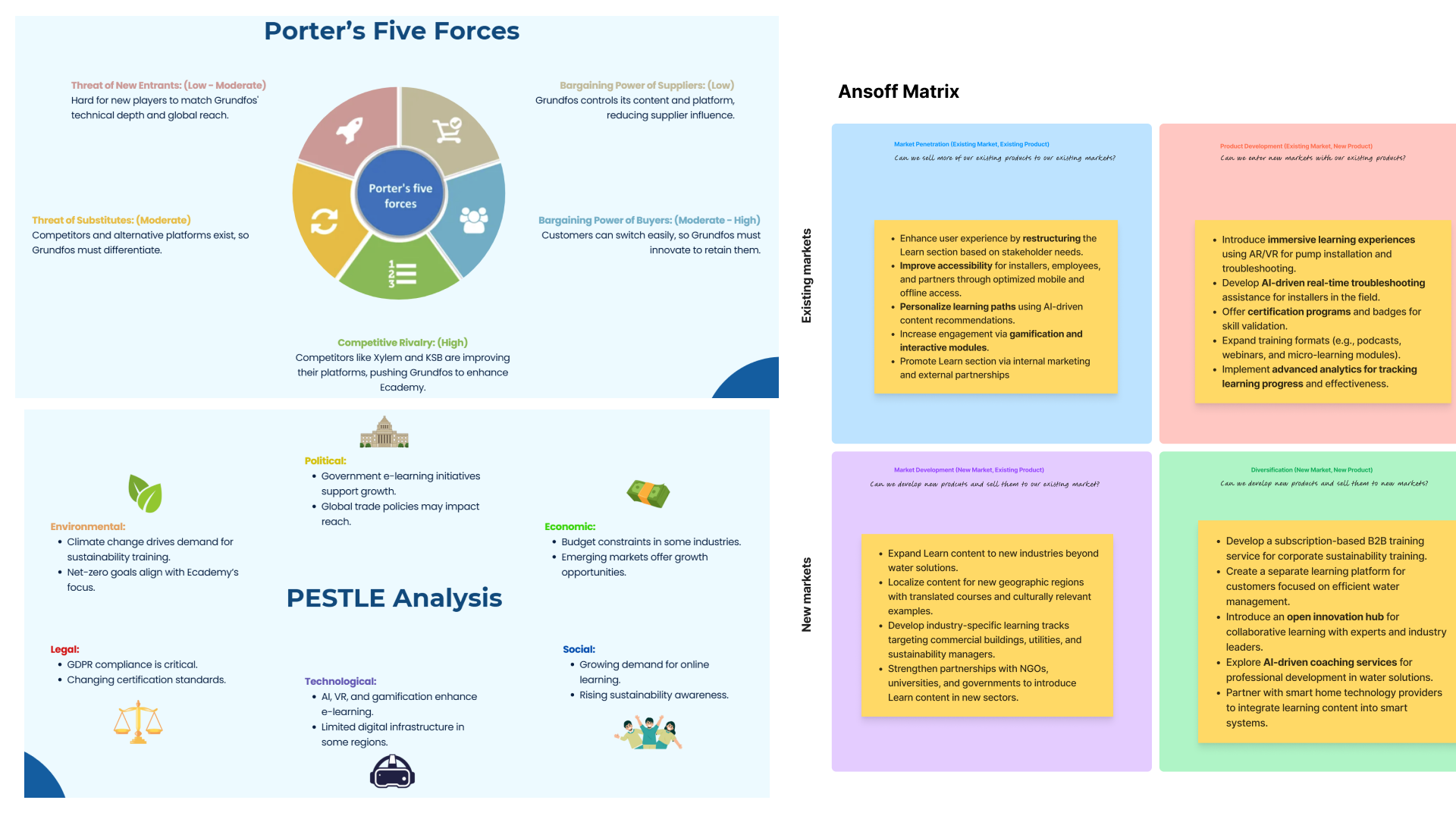
We conducted a PESTLE analysis to evaluate external factors affecting the platform, such as government policies, economic conditions, and technological advancements. We also used Porter’s 5 Forces to assess industry competitiveness, identifying opportunities for growth and potential risks.
We developed detailed customer journey maps for each persona, identifying critical touchpoints, pain points, and moments of satisfaction. This visual approach allowed us to pinpoint areas where users struggled, such as accessing installation guides or navigating complex systems, and where they derived value, such as through streamlined processes or access to technical tools.
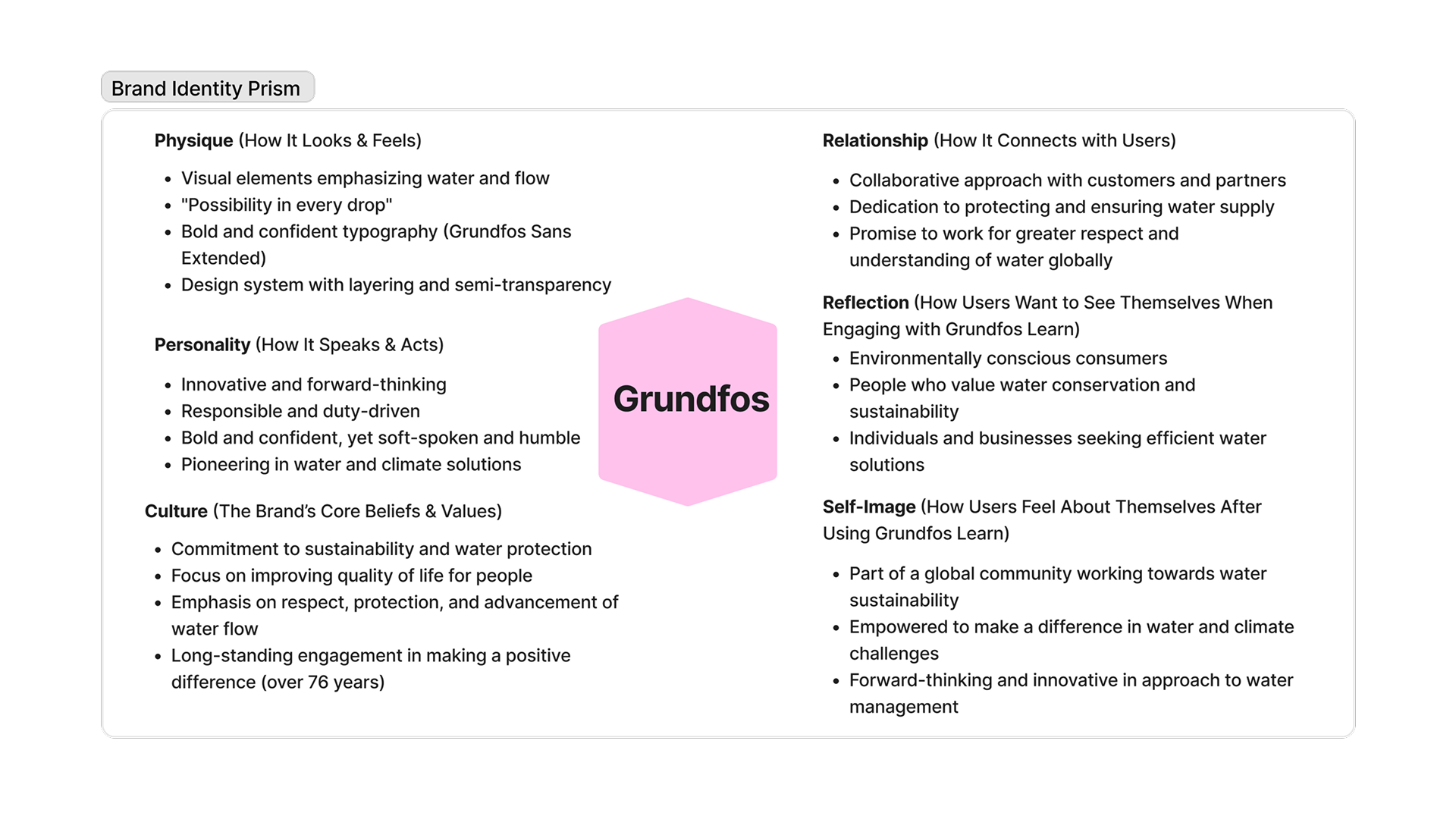
Using the Brand Identity Prism, we aligned the platform’s design with Grundfos’ brand identity, emphasizing innovation, sustainability, and user-centricity. This ensured that the platform not only met user needs but also reinforced Grundfos’ mission to improve quality of life through water management.
We formulated a business case to solidify our understanding of the challenge and its potential solutions. This included a detailed plan for estimation, design, testing, and change management, ensuring a structured approach to the project.
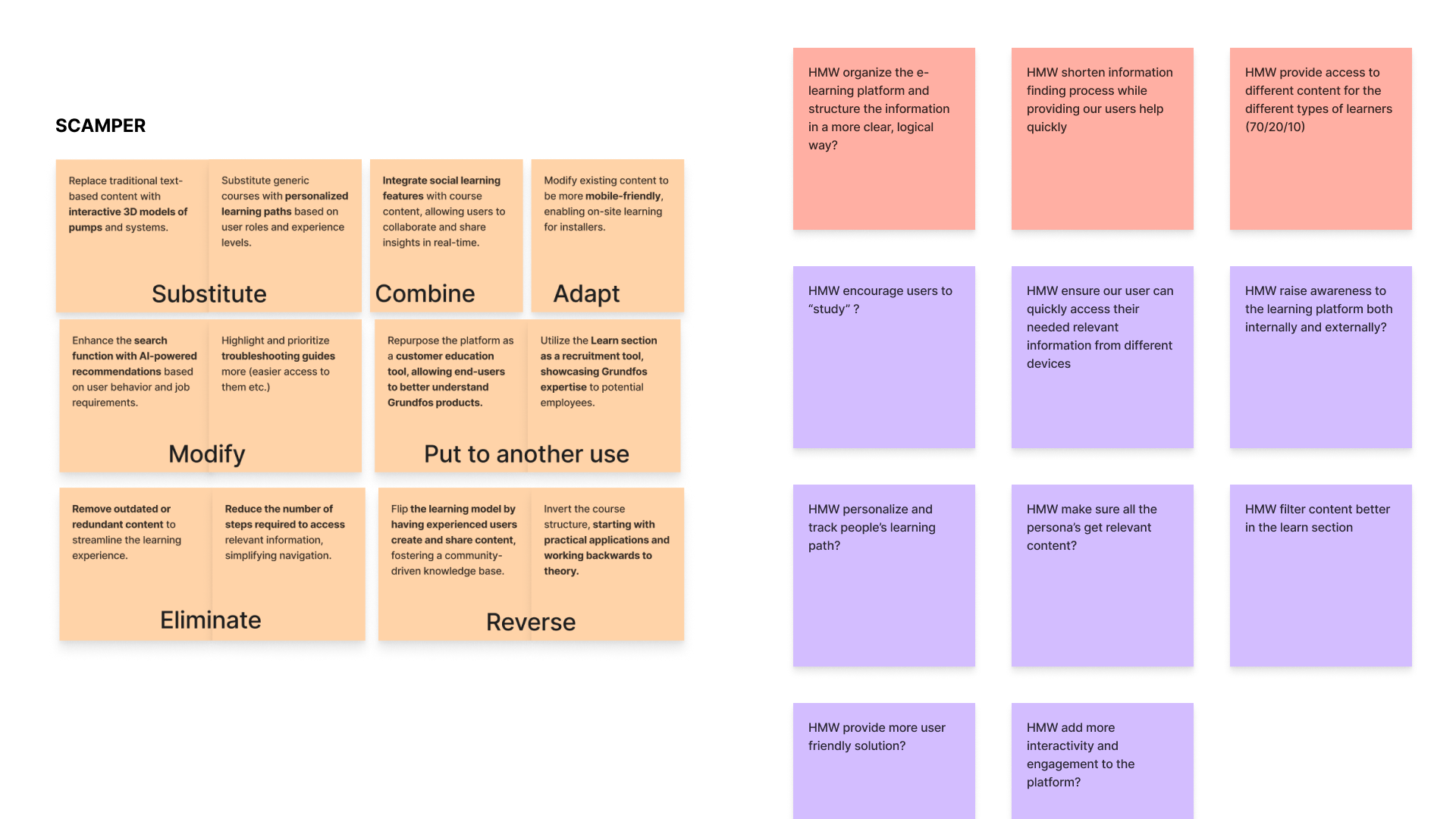
We applied the SCAMPER method to generate innovative ideas for the platform. Key concepts included:
We used HMW questions to frame challenges as opportunities for innovation. Key questions included:
We drew inspiration from platforms like LinkedIn Learning and Coursera, incorporating features such as personalized progress tracking and interactive modules into our design.
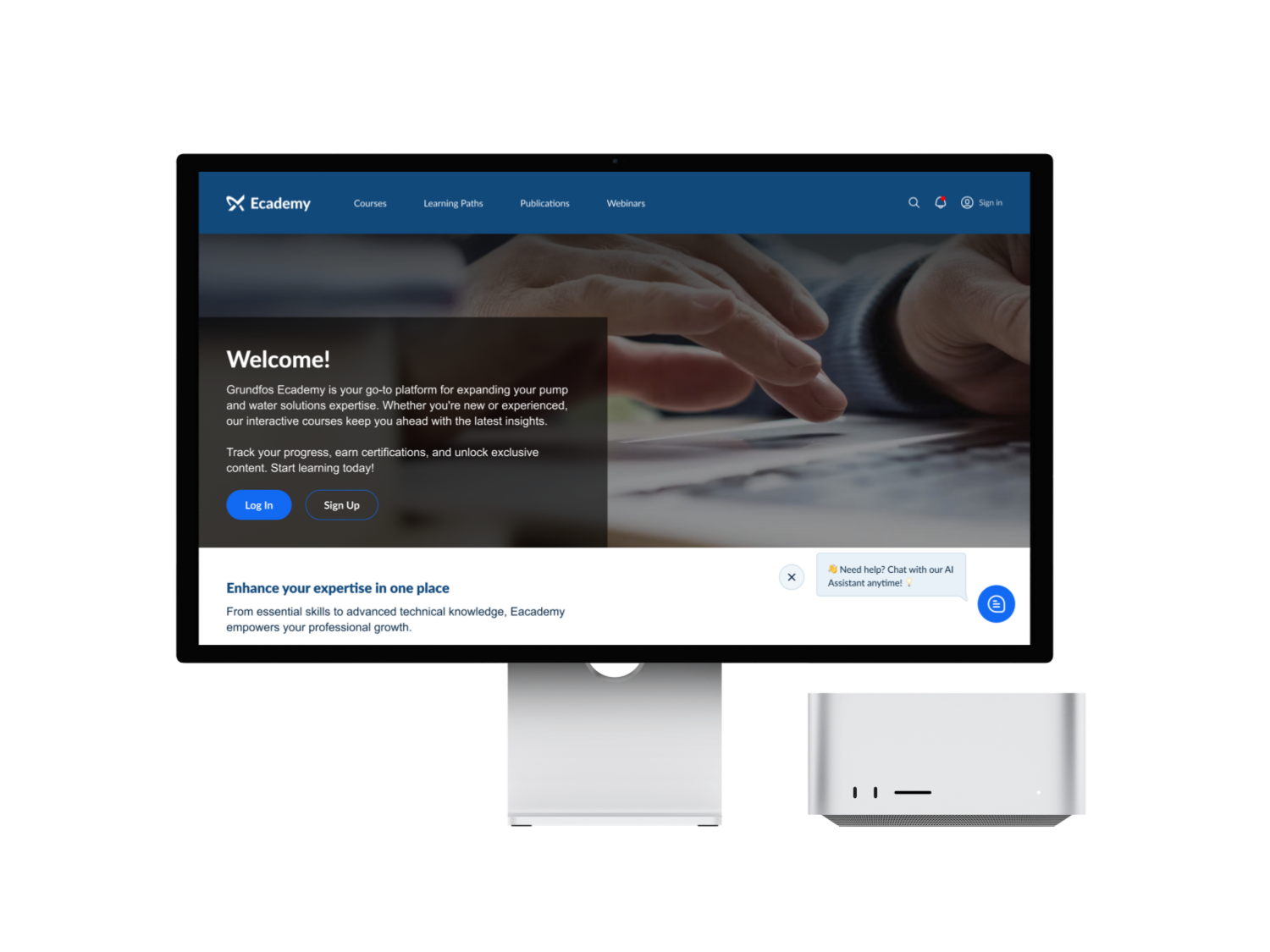
Based on our ideation, we created sketches and developed a high-fidelity prototype using Figma. The prototype featured a redesigned homepage, personalized learning paths, an AI-powered chatbot, and a responsive mobile layout.
We conducted usability testing with five participants to evaluate the prototype’s navigation and user experience. Feedback highlighted the need for clearer information on learning tracks and the inclusion of a "Save for Later" button on course pages. Overall, participants found the prototype clear, easy to navigate, and appreciated features like the AI chatbot and discussion section.
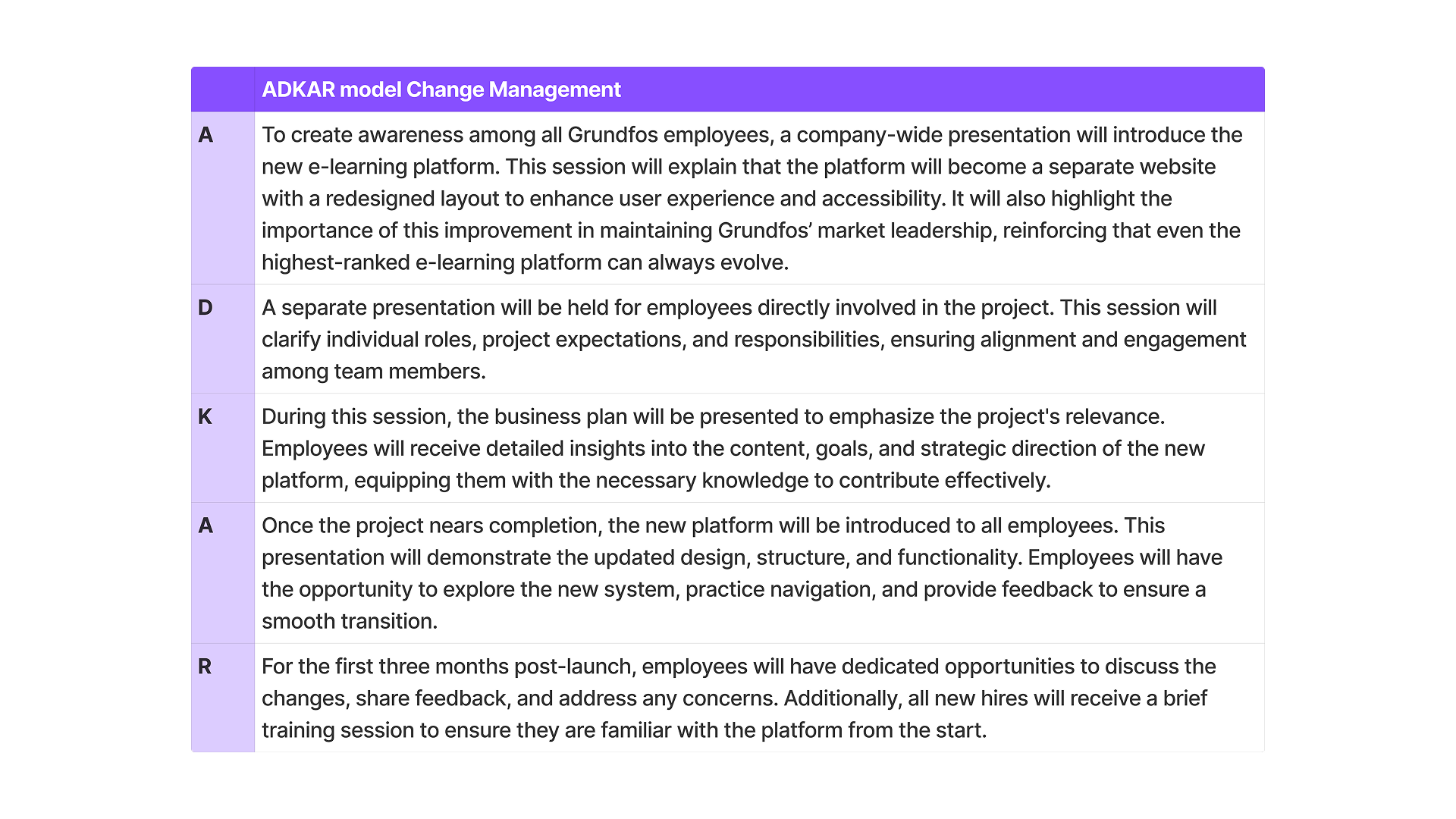
Using the ADKAR model, we developed a change management plan to ensure a smooth transition to the new platform. This included company-wide presentations, role-specific training, and opportunities for feedback post-launch.
One of the main limitations of the project was the lack of access to Grundfos’ design components, which made the final concept less realistic. Additionally, time constraints limited our ability to conduct more extensive testing with a larger target audience. However, the project provided valuable lessons in user research, ideation, and prototyping, and demonstrated the importance of aligning digital solutions with brand values and user needs.
The redesigned Grundfos Ecademy platform represents a significant step forward in creating a more intuitive and engaging e-learning experience. By addressing user pain points, incorporating innovative features, and aligning with Grundfos’ mission, the platform not only enhances user engagement but also reinforces Grundfos’ position as a leader in water technology and sustainability. This project underscores the importance of user-centric design and strategic innovation in driving digital transformation.
Case study
Contact
Got an idea, a project, or just want to chat? Drop me a message—promise I’m friendly! 😊


.svg)